Describing an intermittent car fault: a useful observation log
Help a mechanic understand a problem that does not happen on every journey, without trying to reproduce it unsafely.
Contact MK Mechanics to confirm current availability and arrangements.
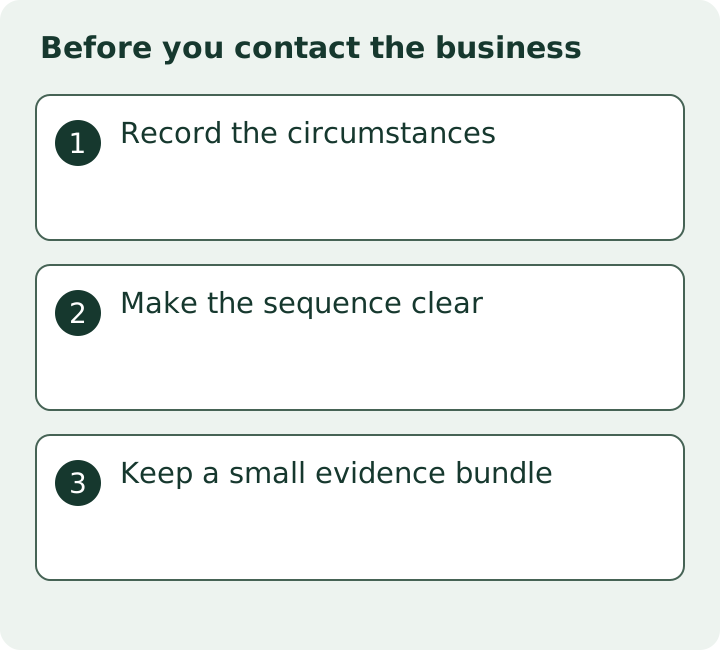
Record the circumstances
Write down the date, approximate mileage, whether the engine was cold or warm, and what happened immediately before the symptom. Useful observations might include starting after a night parked, driving over an uneven surface, or using the ventilation. Record what you actually noticed rather than turning the observation into a diagnosis. “A clicking sound when starting” is more useful than naming a part you have not had inspected.
Make the sequence clear
Describe the first symptom, what followed and how long it lasted. Note any dashboard message exactly, if you can do so while safely stationary. Say whether the issue stopped on its own or after the vehicle was switched off. Do not repeatedly start, drive or operate a faulty vehicle just to make a demonstration video. Never use a phone to record while driving.
Keep a small evidence bundle
A short written timeline, an existing repair invoice and a stationary photograph may be enough for an initial discussion. Avoid sending an entire gallery or unrelated personal documents. If another garage has already examined the vehicle, explain what work was agreed and what the invoice says. Ask before sending a large video; the mechanic can suggest whether that evidence would be useful.
Ask for the right assessment
Contact MK Mechanics with the registration, location and summary. Ask whether the issue can be assessed at that location, what an initial inspection would involve, and what happens if the fault is not present during the visit. A remote description cannot prove roadworthiness. GOV.UK makes clear that a vehicle can be unsafe despite a current MOT; if safety is in doubt, arrange appropriate help rather than a test drive.
Sources and scope
General source guidance checked 28 October 2026. This article does not establish a business service, price or individual assessment.
Frequently asked questions
Should I try to recreate the fault while driving?
Do not create a risky situation to gather evidence. Describe what you already observed and ask about safe assessment.
Is a warning-light photograph a diagnosis?
No. A safely obtained image may help identify the warning, but the cause still needs assessment.
Continue planning
- Mobile mechanic or workshop: questions that help you choose
- A car that will not start: information to give a mechanic
- Organising vehicle service records before your next enquiry
- Planning vehicle checks before a longer trip
All guides · Business sources and image credits · Privacy choices